
What documentary production actually costs in London (and why)
You're shopping for documentary production and the quotes are all over the place. Here's what you're actually paying for — and what moves the number.
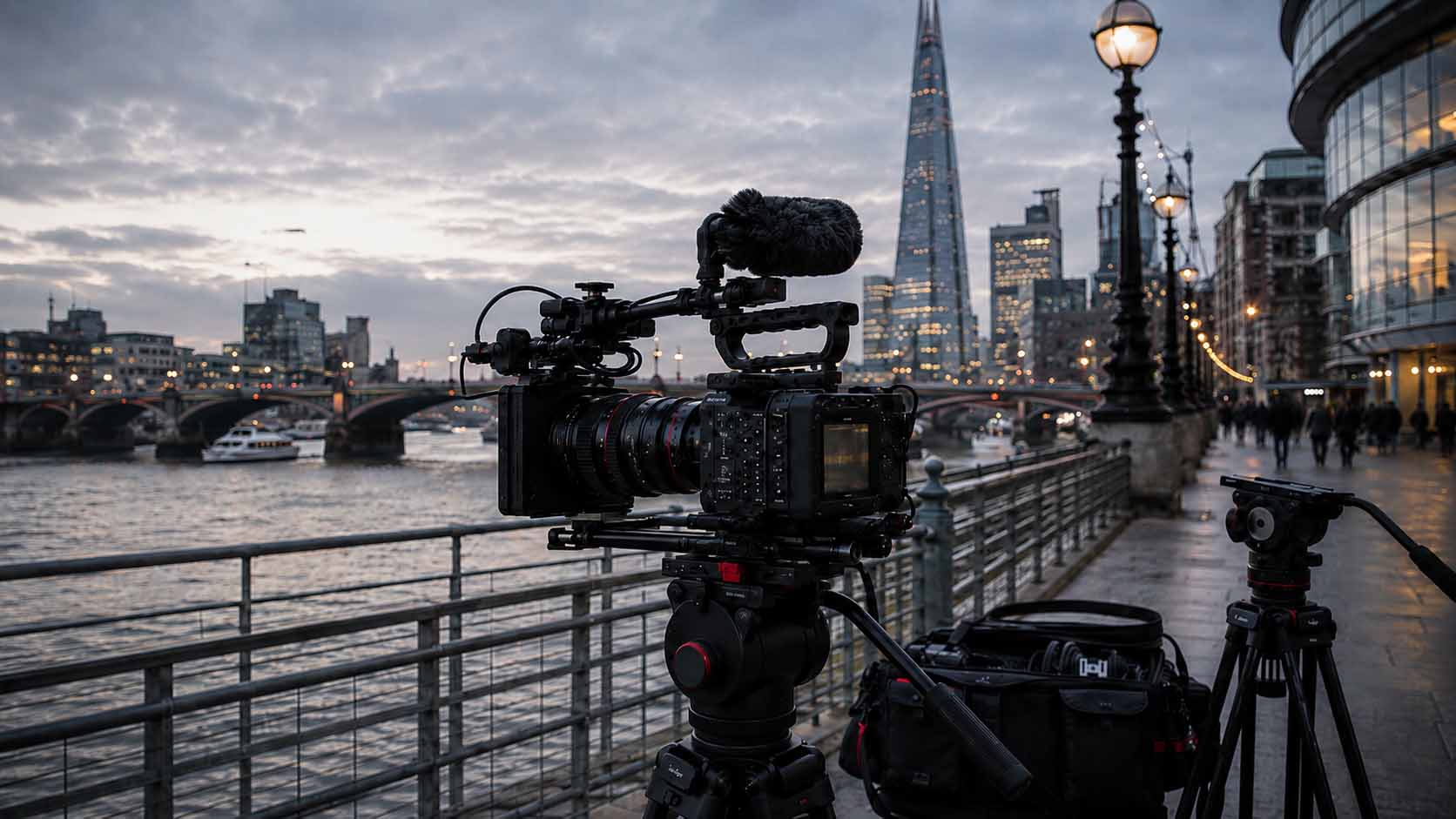
You're a marketing or comms manager shopping for documentary production. You've sent out three briefs and got back three quotes that don't overlap. One's £8,000, one's £18,000, one came back as "let's talk." None of them explained what you're actually paying for.
This is what documentary production actually costs in London, what moves the price, and why the spread is so wide.
The day-rate structure nobody explains upfront
Documentary production bills on day rates, not flat fees. The crew you hire determines the daily burn rate, and the shoot length determines the total.
A single-camera corporate documentary typically needs four roles on shoot days: director, director of photography (DP), sound recordist, and lighting tech. In London, market rates sit around:
Director: £400–£600/day
DP (with camera kit): £500–£700/day
Sound recordist (with kit): £350–£500/day
Lighting tech (with kit): £300–£450/day
That's £1,550–£2,250 per shoot day for a four-person crew before you've paid for locations, talent, or post-production. A 3-day shoot runs £4,650–£6,750 just in crew costs.
Some productions consolidate roles. A director-DP hybrid (common on smaller projects) might charge £600–£800/day and handle both jobs. You save a day rate but you lose the separation of creative direction and camera operation — that trade-off works for interview-led films, less so for observational documentary work.
What a typical project timeline looks like
The documentary production cost in London is driven more by post-production than by shoot days. Most corporate films follow one of two patterns.
10-minute film: 3-day shoot, 3-week edit, £12,000–£18,000 total. That's 3 days of crew at the rates above, plus 15 days of editing at £300–£450/day, plus pre-production (scripting, recce, scheduling) and post-production finishing (colour grade, sound mix, export formats). Music licensing and motion graphics push the top end higher.
30-minute film: 5-day shoot, 6-week edit, £25,000–£40,000 total. Longer films don't scale linearly — you're not just tripling the 10-minute budget. The edit takes longer because you're shaping a narrative from more material, not just trimming to time. A 30-minute documentary might generate 15–20 hours of footage; a 10-minute piece might shoot 6–8 hours. The ratio of shooting to editing inverts as runtime grows.
Pre-production is typically billed as a fixed fee or a percentage of the shoot budget (10–15% is common). It covers scripting, location scouting, talent coordination, shot lists, and risk assessments. On a £15,000 project, expect £1,500–£2,000 for pre-production. On a £35,000 project, closer to £3,500–£5,000.
What changes the price (and what doesn't)
The variables that move documentary production cost in London by thousands, not hundreds:
Multi-camera shoots. A second camera means a second DP or camera operator, another £500–£700/day. It's standard for panel discussions, live events, or any scene where you can't reset and go again. For sit-down interviews, it's a stylistic choice — two angles in the edit, but you're paying for it every shoot day.
Locations. Shooting in your office is free. Shooting in a central London co-working space might cost £200–£500/day in location fees. Shooting at a heritage site, a working factory, or anywhere that requires insurance, permits, or access coordination can add £1,000–£3,000 to the budget before the crew arrives. Location sound in noisy environments (construction sites, busy streets) often means additional kit or a second sound day to capture clean audio separately.
Talent and contributors. If you're interviewing your own staff, there's no talent cost. If you're hiring a presenter or a voiceover artist, budget £300–£800 for a half-day session. If you're coordinating external contributors (customers, partners, industry voices), the production cost doesn't usually include their fee, but it does include the producer time to schedule, brief, and release-wrangle them — that's baked into pre-production.
Music licensing. Stock music from Epidemic Sound or Artlist costs £100–£200/year for a corporate licence. Licensing a recognisable track for commercial use starts at £1,000 and climbs fast depending on the artist and the usage term. Original score composition runs £500–£2,000 depending on length and complexity. Most corporate documentaries use stock; most brand films with a media budget use original.
Motion graphics and animation. A lower-third name tag is included in most edit quotes. An animated explainer sequence, a data visualisation, or a branded title sequence is not. Budget £500–£1,500 for motion graphics on a 10-minute film, £1,500–£4,000 on a 30-minute piece if the story needs it. If the brief says "make the data come alive," the price moves.
Colour grading and sound mixing. Basic colour correction is part of the edit. A dedicated colourist session (matching footage across multiple cameras, creating a cinematic look, correcting difficult lighting) costs £300–£600/day and typically takes 1–2 days. A professional sound mix (balancing dialogue, music, and atmos, removing background noise, mastering for broadcast) runs £400–£800 for a 10-minute film, £1,000–£2,000 for 30 minutes. If the film is going to broadcast or cinema, you pay for both. If it's internal comms or web-only, you might skip the colourist and do a lighter sound pass.
Why the quotes don't match
Three companies quoting the same brief will interpret it differently because documentary production has no fixed specification. A "10-minute film about our company's sustainability work" could mean:
One interview, cut with B-roll, voiceover, and stock music — £8,000.
Three interviews across two locations, original score, motion graphics, and a dedicated sound mix — £18,000.
Multi-day observational shoot, external contributors, drone footage, and a festival-grade finish — £35,000.
All three are valid answers to the same brief. The spread isn't about one company overcharging; it's about different assumptions on crew size, shoot days, post-production finish, and what "documentary" means.
When you're comparing quotes, ask:
How many shoot days, and what size crew on each?
How many weeks of edit, and is the editor also the director?
What's included in post-production finishing (colour, sound, graphics)?
What's not included (music licensing, travel, location fees, revisions beyond round two)?
The cheapest quote isn't always the worst deal, and the most expensive isn't always the best film. You're looking for the one that matches the finish you actually need.
What you should actually budget
If you're commissioning a corporate documentary in London and you want a finish that doesn't look like internal comms, budget £12,000 minimum for a 10-minute film and £25,000 minimum for 30 minutes. That gets you a competent crew, a proper edit, and a film you can publish externally without apology.
If you're working with a smaller budget, the honest move is to reduce scope — fewer shoot days, fewer locations, one interview instead of three. A well-shot single interview with strong B-roll will always outperform a poorly-resourced multi-location shoot that tried to do too much.
If the brief includes broadcast delivery, festival submission, or cinema screening, add 20–30% to the budget for the higher post-production standard those formats require. Web-only films can skip some of that finishing; anything going on a big screen cannot.
The documentary production cost in London hasn't moved much in five years, but the gap between web-finish and broadcast-finish has widened. Audiences now expect colour and sound that used to be reserved for TV. If you're publishing on your homepage or using the film in a pitch, pay for the finish. If it's internal-only or a one-time event opener, you can pull back.
What to do with this
If you're shopping for production right now, send the same brief to three companies and ask for a line-item breakdown: shoot days, crew roles, edit weeks, and what's in versus out of scope. The quote that comes back as a single number with no explanation is the one to ignore.
If you want to see what we do at Studio 127, our videography service covers corporate documentary, brand films, and interview-led content. Book a call if you want a breakdown for your specific project — no deck, just the answers to what it'll actually cost and why.
Written by
Michael Adeleye
Keep reading
Related articles.
podcasting
Why your podcast guest sounds worse than you (and how to fix it before the session)
Guest audio is the rate-limiter on episode quality. Here's the 48-hour checklist I send every podcast member to forward — five fixes that move the needle without asking someone to build a booth.
Read article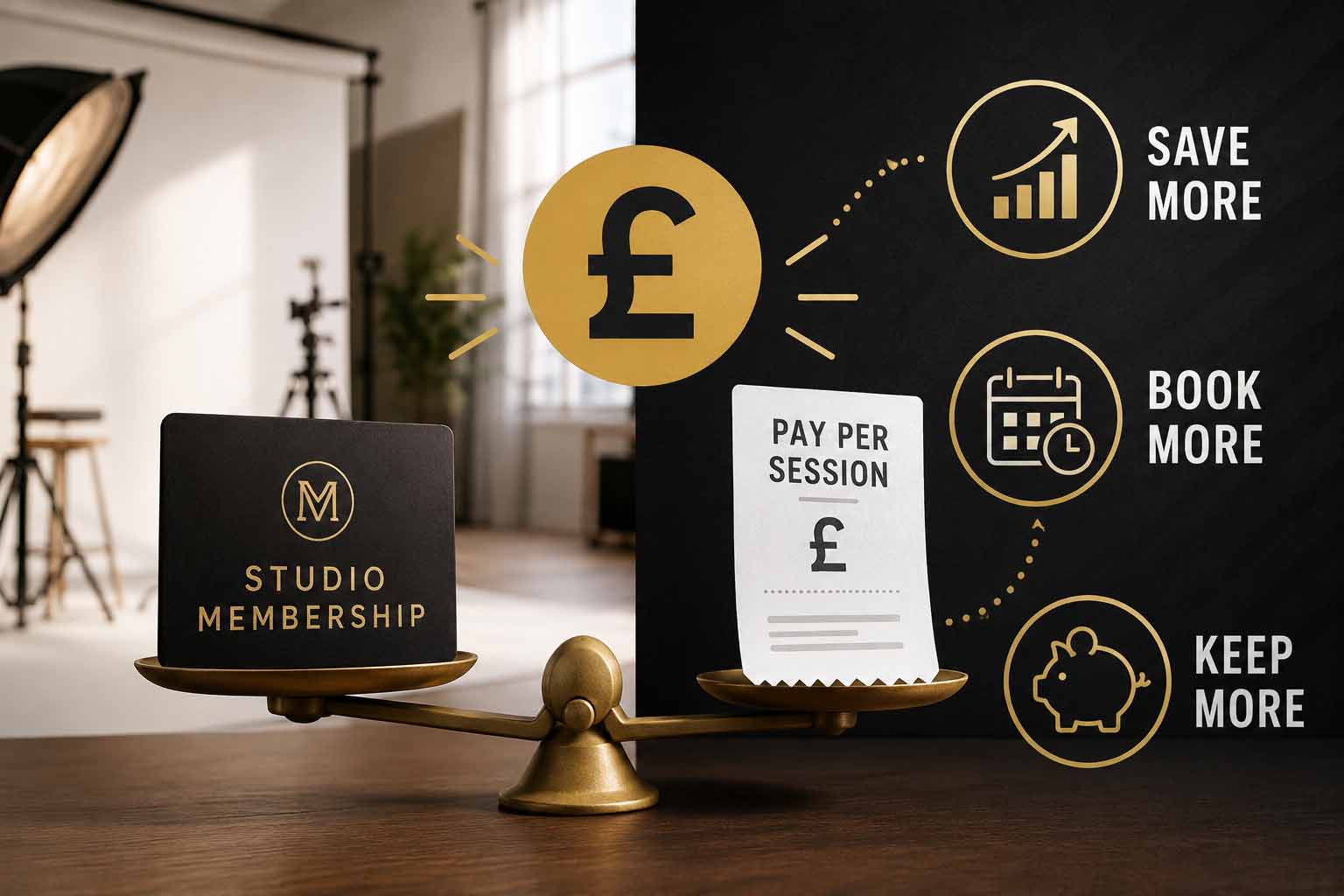
membership
When studio membership actually saves you money (and when it doesn't)
Studio membership isn't always cheaper than booking per session. Here's the honest maths on when £180–950/mo pays off vs. the £50/hr walk-in rate.
Read articleNewsletter
Practical notes from a working SE London studio.
One short email a month — what we shot, what we learned, no spam.
Listen to article
Browser narration
Browser narration. Voice quality varies by device.