
Your first podcast: from idea to episode one
A working podcast studio's no-fluff guide to launching your first episode — the four decisions that matter most, the kit you actually need, and the moves first-time podcasters waste the most money on.
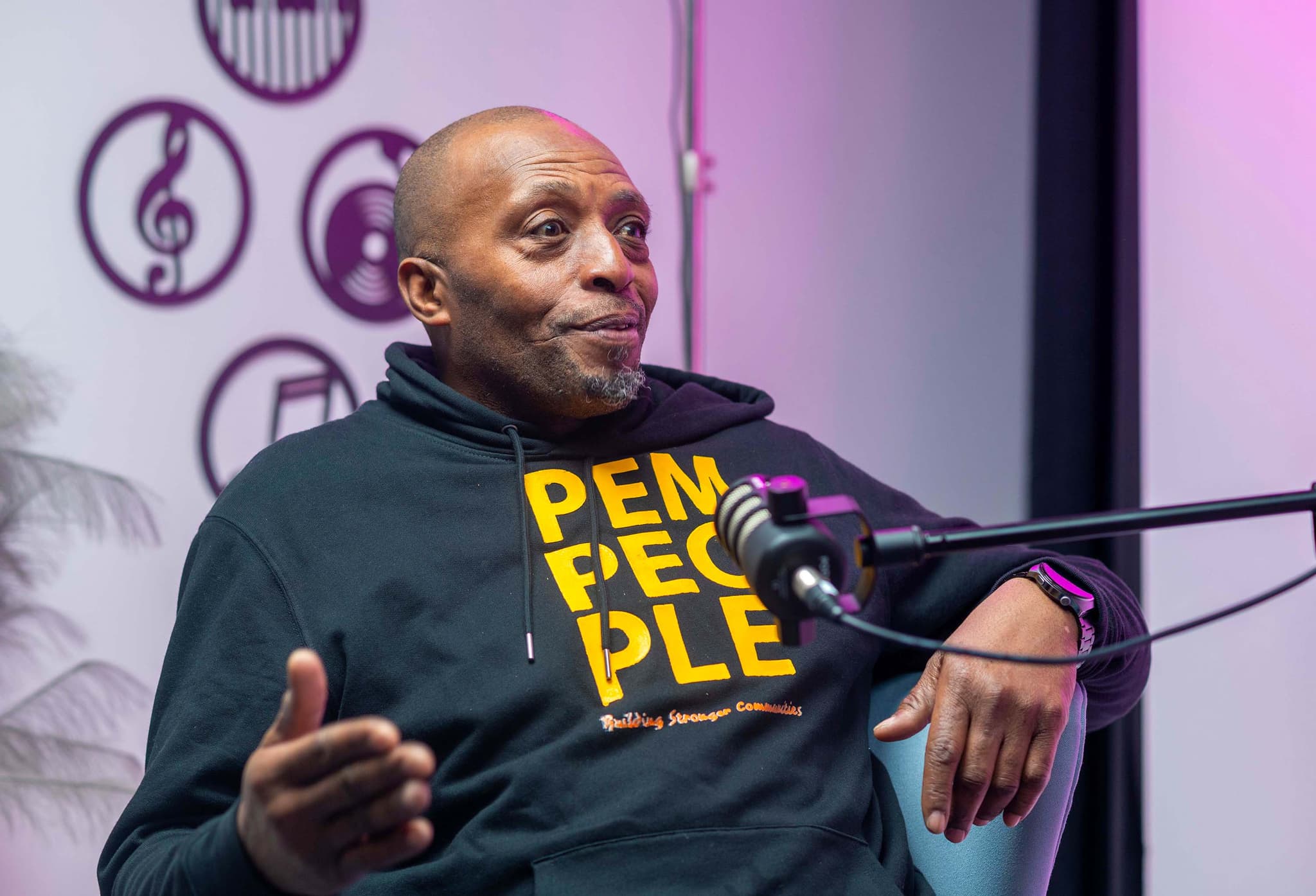
If you've never made a podcast before, the most expensive thing you can do isn't picking the wrong microphone. It isn't picking the wrong host. It's spending three months on prep before recording episode one.
This is a working studio's no-fluff version of how to start. Four decisions that actually matter, what kit you actually need, and the moves first-time podcasters most often waste money on.
The four decisions that matter
Most podcast prep advice tries to sell you on twenty things. Honestly, four:
1. Format. Solo monologue, host-and-cohost, or host-and-guest. This decides everything else. Solo means scripted; cohost means show prep; guest-led means logistics.
2. Episode length. Aim for 25–45 minutes for the first ten episodes. Longer than 45 needs editorial discipline you don't have yet. Shorter than 20 makes the production overhead per minute disproportionate.
3. Cadence. Weekly or fortnightly. Don't promise weekly until you've shipped four episodes. Most podcasts that fail in year one fail at episode 6, when the host realises a 10-minute script needs five hours of prep.
4. Distribution platforms. Spotify, Apple Podcasts, YouTube. That's it for the first season. Don't spread to ten platforms before you have ten listeners on three.
If you can't write three sentences each on those four decisions today, don't book a studio yet. Write them first.
Kit you actually need
You don't need to buy any of it. A studio rents it to you on the day. But understanding what's involved sharpens the decisions about what kind of session to book.
Audio side:
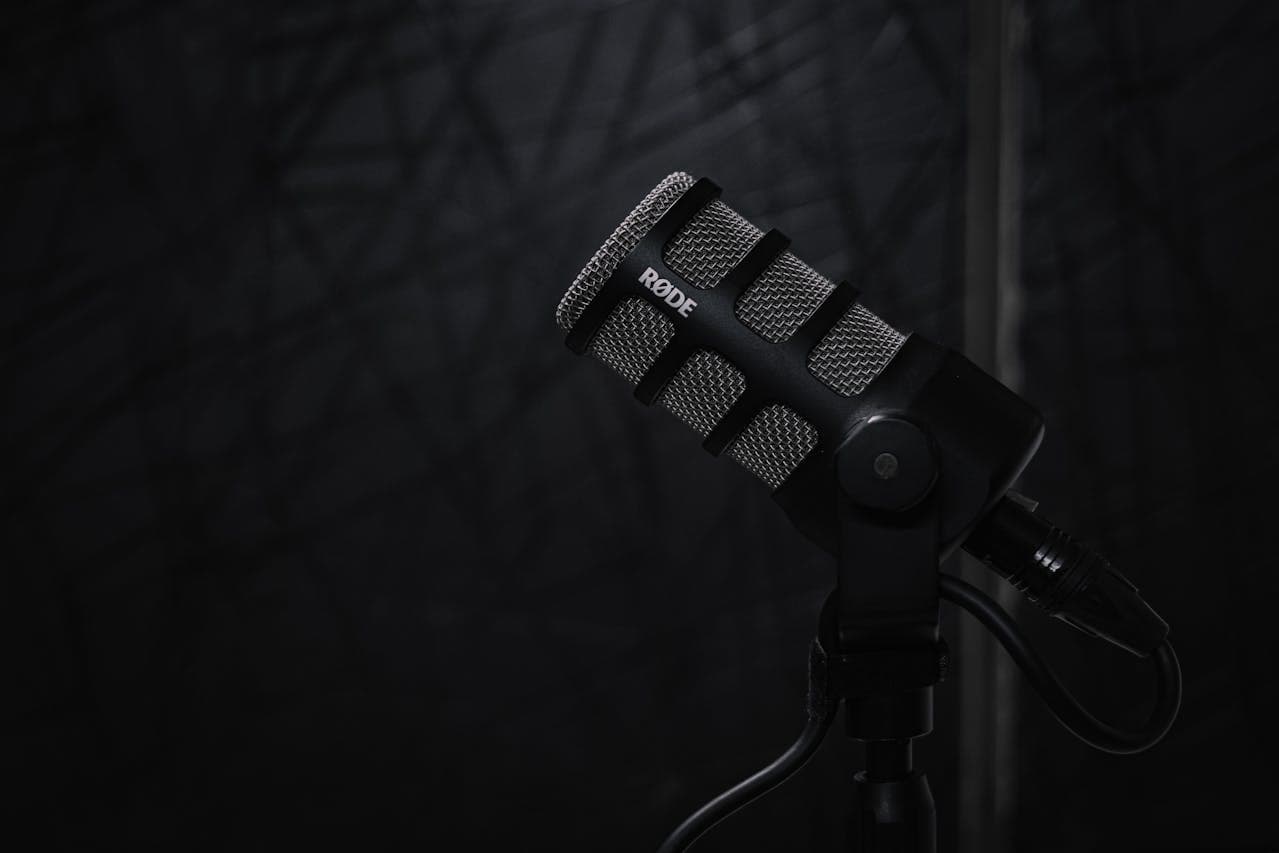
- A broadcast-grade dynamic microphone — usually a Shure SM7B or a Rode PodMic. These are the two standards. Not USB. Not "good for podcasting" — good for podcasting is what every cheap mic claims.
- A multi-track interface or mixer. Multi-track means each mic records to its own audio file. This matters in editing — you can't fix a host who's too loud relative to the guest if both voices are mixed into one file.
- An acoustically-treated room. Not a closet with a duvet. The room is half of how a podcast sounds.
- Headphones for everyone in the conversation. Open-back headphones bleed audio into the mics; closed-back doesn't.
Video side (if you're doing a video podcast):
- Multi-camera 4K capture. Three cameras minimum for a two-host setup; four for guests.
- Lights. The number-one tell of an amateur video podcast is uneven lighting — one host is in shadow, the other is overlit.
- A production switcher / sync system so the cameras stay in sync across the edit.
If your studio doesn't include all of the above, it's a "room for hire" not a podcast studio. Different product.
The single biggest first-timer mistake
Recording too many pilot episodes you'll never publish.
The default first-timer move is: record three pilots to "find your voice." Pilots are seductive because they feel safe — no one's listening, no one's judging, you can keep iterating.
What actually happens: by pilot three, you've worked out your voice but you also have three unreleased episodes. None of them are good enough. You don't release any. The show never launches.
Instead: record episode one knowing it goes live. Yes, episode one will be the worst-sounding episode of season one. That's a feature, not a bug. The arc from episode one to episode ten is the show, and listeners come along for the climb. Every long-running podcast has an embarrassing episode one.
Where to record episode one
Three options, in roughly increasing cost and increasing quality:
1. Your bedroom with a USB mic. Cheapest. Sounds like a bedroom. Acceptable if your audience knows and forgives the audio. Not acceptable for a B2B or branded show.
2. Hourly hire at a podcast studio. £50–110/hour in London depending on location and inclusions. Walks in with kit, walks out with raw files. Right for the first season if you're confident with the editing side or you have an editor.
3. Full-production booking at a podcast studio. £170–500 per episode depending on inclusions. They record, edit, master, generate clips, write show notes. Right for first-timers without an editor and without time to learn one.
Option 2 with a producer in the room (so you have someone watching levels, calling re-takes, prompting if a thread tails off) is the most common first-season choice. You pay slightly more than the cheapest hourly rate; you save weeks of post-production stress.
Mistakes first-time podcasters waste money on
In rough order of how often we see them:
Buying their own equipment before recording episode one. £600 of mic and interface that gets used for three episodes and lives in a drawer. Rent the kit by the hour for the first season; buy only after you know what cadence you can sustain.
Hiring a video team before the audio is consistent. Video adds complexity an order of magnitude greater than audio. If you can't reliably ship a polished audio episode every two weeks, video will sink the show.
Buying a logo and a wordmark before episode one. It changes anyway. A clean text logo until you've shipped six episodes is fine. The brand will want to change once the voice settles.
Booking a long studio session for episode one. Three-hour booking for a 30-minute episode. New podcasters underestimate how much downtime there is in a session — re-recording an intro, settling in with a guest, technical setup. But three hours is too much. Two hours is the minimum useful booking; that's it for episode one.
Hiring an SEO / marketing person before there's content to market. Marketing a podcast that has one episode is harder than marketing a podcast that has ten. Ship first.
Promising a weekly cadence in the trailer. Then announcing in episode three that it's now fortnightly. Don't promise what you can't sustain — every podcast post-mortem on the internet starts with "I tried weekly and it killed me."
A realistic first-season timeline
Eight weeks from "I want to start a podcast" to "episode one is live":
- Week 1: Lock the four decisions. Write the show description, the cover-art brief, and the episode-one outline.
- Week 2: Brief a designer for cover art (Fiverr / Upwork is fine for season one). Set up Spotify for Podcasters and Apple Podcasts Connect. Buy or rent the recording slot.
- Week 3: Record episode one + episode two in a single 3-hour studio session. Two episodes from one session is the lowest-overhead way to launch.
- Week 4: Edit (or get edited). Get cover art finalised. Write show notes for both episodes.
- Week 5: Submit the trailer + episode 1 + episode 2 to Spotify and Apple. Approval takes 1–7 days.
- Week 6: Episodes 1 and 2 go live the same day. Trailer drops the week before.
- Week 7–8: Record episodes 3 and 4 in another studio session. Cadence is locked.
Eight weeks. Two studio sessions. Four episodes published or in the can. That's a real season-one launch.
What we recommend at our studio
Most first-time podcasters who book us do one of two things:
- A 4-hour Day Block — record two or three episodes back-to-back, take the raw files away, edit yourselves or hire an editor afterwards. £175 inclusive.
- A 4-pack of Full Production episodes — we record, edit, master, generate clips and show notes for four episodes. £600 total — £150 each. Cleanest path if you don't want to learn the editing side yet.
Either is enough to launch a season. We'd recommend the 4-pack for first-timers who don't already have an editor — by the time you've shipped four episodes, you'll know whether the show has legs and whether you want to keep us doing the post or take it in-house.
What to bring on the day
A short list:
- A loose outline (not a script — outlines beat scripts for natural delivery)
- Water + a snack
- A phone charger; phones run flat fast in studios
- Anything you want to reference verbatim — quote, statistic, name
- Your guest, on time, briefed (we'll prep them with a 5-minute intro)
That's it. Don't overthink it.
FAQs
Do I need to write a script?
For solo: yes, but call it bullet points, not a script. Reading from a script reads as "reading." Bullet points let you say it your way.
How many episodes should I record before launching?
Two minimum. Listeners who like episode one immediately want episode two — having one ready means you don't lose them. Three is better. Don't record ten before launching; you'll be too perfectionist about episode one.
Can I edit my own podcast?
Technically yes. Practically: you'll spend more time editing than recording for the first three episodes. Most podcasters give up at the editing stage because the time-per-episode never amortises. Pay an editor for season one if you can.
What's the realistic cost of season one (10 episodes)?
DIY all the way (own kit, your own edits, free distribution): ~£300 in software/cover art/hosting.
Studio-recorded, self-edited: ~£1,500 in studio time + ~£300 for cover/hosting.
Studio + full production: 2–3 4-packs at £600 each = ~£1,500–1,800 for the whole season.
How do I get listeners?
Honestly: you don't, in season one. The realistic count for a podcast you don't actively promote is 100–500 plays per episode, mostly friends and warm network. Growth is a season-two-and-beyond problem. Make the show first.
What to do next
If you're at "I think I want to start a podcast":
1. Write the four decisions on one page. If you can't, the show isn't ready yet.
2. Book a 15-minute call with us — we'll talk through the format with you. Free, no commitment.
3. When you're ready to record, pick a Day Block or a 4-pack.
If you're already at episode three or four and the show is finding its voice — start a Studio 127 membership and lock the cadence in.
Written by
Michael Adeleye
Keep reading
Related articles.
Pricing
How much does a podcast studio cost in South East London?
A working SE London studio's honest answer — including what you're paying for, where SE London genuinely beats central, and the rates we actually charge. No hidden fees, no fluff.
Read article
podcasting
Why your podcast guest sounds worse than you (and how to fix it before the session)
Guest audio is the rate-limiter on episode quality. Here's the 48-hour checklist I send every podcast member to forward — five fixes that move the needle without asking someone to build a booth.
Read articleNewsletter
Practical notes from a working SE London studio.
One short email a month — what we shot, what we learned, no spam.
Listen to article
Browser narration
Browser narration. Voice quality varies by device.